Police Checkpoints: A friendly guide on what to do when signaled to stop
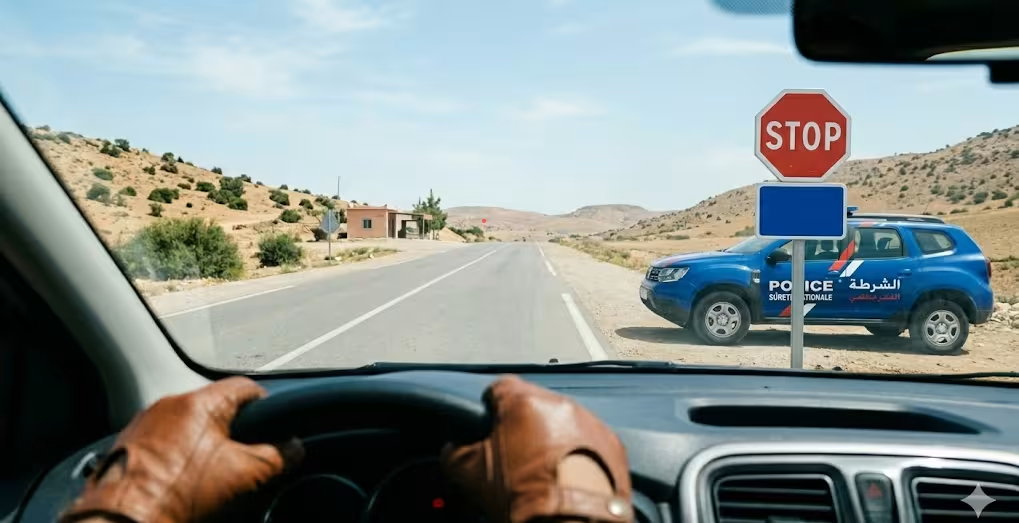
Navigating Authority: A Calm and Friendly Guide to Moroccan Police Checkpoints
For many international travelers, the sight of a police or Gendarmerie checkpoint on a foreign highway can be intimidating. In Morocco, however, these barrages are a routine and vital part of national security and road safety. They are not something to be feared, but rather a protocol to be understood. Whether you are entering a major city like Fès or driving through the rural North, you will likely encounter these checkpoints. For Ouailcar clients, driving a high-end vehicle often means you will be treated with professional courtesy. This guide explains the step-by-step etiquette of the Moroccan checkpoint, ensuring that your interactions with the authorities are brief, polite, and completely stress-free, allowing you to get back to your journey in no time.
Recognizing the Checkpoint: Signs and Signals
Checkpoints are never a surprise. They are announced several hundred meters in advance by speed limit signs that gradually drop from 100 km/h to 80, 60, and finally 40 or 20 km/h. You will then see a red and white sign that says Halte (Stop) followed by Police or Gendarmerie.
The Slow Roll vs. The Full Stop
As you reach the actual checkpoint, you will see officers standing near traffic cones or a small booth. The unwritten rule here is the slow roll. Do not slam on your brakes, but slow down to a walking pace (about 5-10 km/h). Look at the officer. In many cases, especially when they see a tourist in a clean, modern Ouailcar rental, they will simply give you a small wave or a nod to continue. If they do not signal you to stop, you may proceed slowly and then accelerate once you are past the cones. If the officer raises a hand or points to the shoulder, you must pull over smoothly and stop.
If You Are Signaled to Stop: The Golden Rules
If an officer decides to check your documents, remain calm and follow these simple steps to ensure a positive interaction:
- Be Courteous: A simple Bonjour or Salam Alaikum goes a long way. Moroccan officers are generally very professional and appreciate a polite greeting.
- Keep Your Hands Visible: Turn off the radio, roll down your window, and keep your hands on the steering wheel until asked for your documents. If it is dark, turning on the interior cabin light is a highly appreciated gesture of transparency.
- Have Your Documents Ready: Keep your passport, driver’s license, and the Ouailcar rental folder (containing the car’s Carte Grise and insurance) in the glove box so you don't have to scramble to find them.
Common Questions and Speeding
Most stops are purely for document verification. However, if you are stopped for a specific reason, such as speeding (caught by a mobile radar further up the road), the officer will inform you of the infraction. In Morocco, traffic fines (ATF) are paid in cash on the spot. If you were speeding, stay calm, accept the fine, pay the officer in Dirhams, and always insist on an official receipt. At Ouailcar, we recommend keeping some cash specifically for this purpose. Do not attempt to negotiate or offer favors; the system is official, and a respectful, law-abiding attitude is always the best path forward.
Conclusion: Safety in Visibility
Police checkpoints are one of the reasons why Morocco is one of the safest countries in Africa for road travel. They keep the traffic flowing safely and ensure that all vehicles on the road are properly documented. By following this simple etiquette, you transform a potential moment of anxiety into a routine 60-second interaction. At Ouailcar, we ensure all our vehicles have 100% legal and up-to-date documentation, so you can approach any checkpoint with total confidence. Drive safely, respect the local authorities, and enjoy the peace of mind that comes with a well-regulated road network.