Navigating Casablanca: A tourist's guide to road signs and major intersections
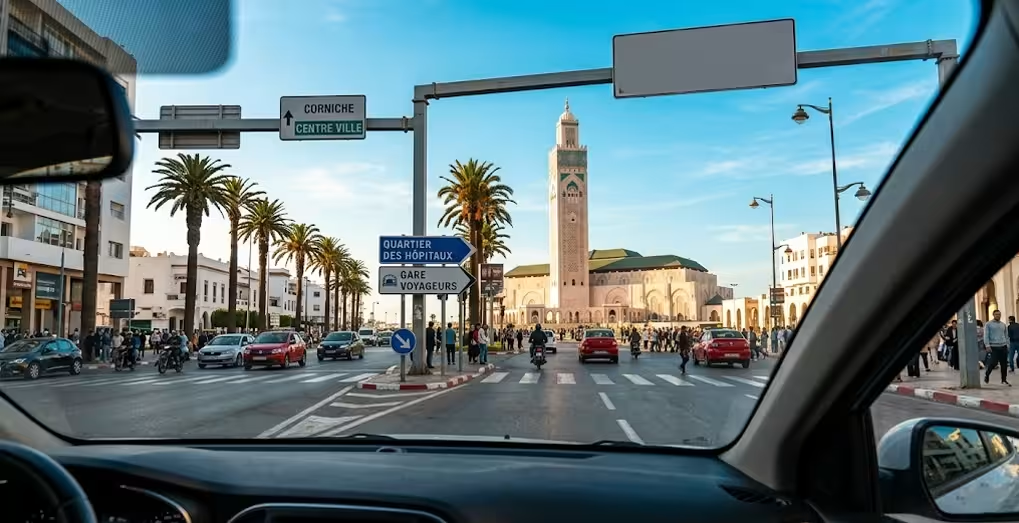
Conquering the White City: A Driver’s Manual for Casablanca
Casablanca is the beating economic heart of Morocco. It is a sprawling, dynamic metropolis where modern business districts overlook the Atlantic Ocean, and grand art-deco boulevards intersect with bustling traditional neighborhoods. For a tourist behind the wheel, driving in Casablanca—often referred to affectionately as "Casa"—can initially seem like a formidable challenge. The traffic is dense, the pace is fast, and the driving culture is assertive. However, with the right knowledge, a calm mindset, and a premium, reliable vehicle from Ouailcar, navigating the White City becomes an exhilarating part of your Moroccan adventure. This comprehensive guide is designed to equip international visitors with the essential skills needed to decode local road signs, master major intersections, and drive through Casablanca with absolute confidence.
The Pulse of Morocco's Economic Capital
Unlike the tourist-centric flow of Marrakech or the relaxed coastal vibe of Agadir, Casablanca is a city built on commerce and daily hustle. Millions of residents commute daily, creating a unique ecosystem on the asphalt. The key to driving here is understanding that traffic laws exist, but they are often interpreted with a degree of fluidity. As a driver, you must adopt a proactive, defensive driving style. Anticipation is your greatest asset. You must constantly monitor your mirrors, as motorcycles and scooters frequently weave between lanes, and local taxis often make sudden stops to pick up or drop off passengers. Driving in Casa is a language of its own, characterized by the strategic use of the horn—not necessarily in anger, but as a communicative tool to say, I am here, or I am overtaking.
Decoding Road Signs and Signage in the Metropolis
Morocco adheres to international standards for road signage, making it relatively straightforward for foreign drivers to understand the basics. The signs are visually identical to those used in Europe, featuring universally recognized symbols, colors, and shapes. However, understanding the nuances of how these signs are deployed in Casablanca is crucial.
Language and Color Coding
Most directional signage in Casablanca is bilingual, presented in both Arabic and French. This greatly aids navigation for international tourists. You will encounter different color codes depending on the type of road you are joining. Blue signs indicate the toll motorways (Autoroutes), such as the A3 leading towards Rabat or the A1 down to El Jadida. Green signs denote major national roads, while white signs indicate local city destinations, specific neighborhoods, or prominent landmarks like the majestic Hassan II Mosque. Pay close attention to speed limit signs; while the general urban limit is 60 km/h, many central avenues and construction zones enforce strict 40 km/h limits, heavily monitored by both fixed and mobile police radars.
Mastering the Major Arteries and Boulevards
Casablanca's layout is characterized by massive, multi-lane boulevards radiating outwards from the port and the city center. Familiarizing yourself with these main arteries is essential for efficient navigation.
The Lifelines of the City
Boulevard Zerktouni and Boulevard d'Anfa are two of the most critical thoroughfares, slicing through the upscale commercial districts. These roads are typically very congested during morning and evening rush hours. Boulevard de la Corniche, stretching along the Atlantic coast, is perhaps the most scenic route, lined with restaurants, clubs, and luxury hotels. It is a beautiful drive, particularly at sunset, but it requires vigilance on weekends when foot traffic and leisurely cruisers fill the lanes. Route d'El Jadida is another massive artery connecting the city center to the southern suburbs and the business parks. When driving on these multi-lane roads, it is advisable to stick to the middle lanes to avoid the unpredictable merging of local traffic from side streets and the sudden stops of public transport in the right-hand lane.
The Grand Intersections and the Art of the Roundabout
If there is one feature that defines the Casablanca driving experience, it is the massive roundabouts and complex intersections. Places like the Rond-point d'Europe or the intersections around Place des Nations Unies require a specific strategy.
Navigating the Circle
By law, vehicles already inside the roundabout have the priority. However, the practical reality in Casablanca is often different. Drivers entering the roundabout will frequently push forward aggressively. If you wait for a completely clear opening, you may be waiting for a long time. The correct approach is a blend of caution and assertiveness. Move forward slowly, establish eye contact with the drivers already in the circle, and merge smoothly but decisively. Do not make sudden, unpredictable stops inside the roundabout. Keep the flow moving, use your indicators well in advance of your exit, and watch out for vehicles attempting to cut across from the inside lane directly to the exit.
Interacting with Diverse Traffic Elements
Your premium Ouailcar rental will share the road with a vast array of other vehicles, each operating under its own rhythm. Understanding these elements is vital for a safe journey.
Taxis, Trams, and Two-Wheelers
Casablanca features two types of taxis: the red Petit Taxis which operate exclusively within the city limits, and the white Grand Taxis which run fixed routes. Petit taxis are ubiquitous and often maneuver aggressively to secure fares. Give them plenty of space. Furthermore, Casablanca has invested heavily in a modern tramway system. The tram lines cross numerous major boulevards. You must pay absolute attention to the dedicated tram traffic lights—which are separate from standard vehicle lights—and never block an intersection where tram tracks are present. Finally, the sheer volume of mopeds and delivery motorcycles cannot be understated. They will pass you on both the left and the right, often utilizing the narrowest of margins. Always double-check your blind spots before changing lanes or making a turn.
Parking Strategies for the Urban Explorer
Finding a parking spot in the dense center of Casablanca (such as the Maarif district or the old Medina) can be taxing. Street parking is tightly packed, and parallel parking skills are a must.
The Gardiens de Voitures
When parking on the street, you will invariably encounter the Gardiens de Voitures. These are informal, though officially tolerated, parking attendants wearing high-visibility blue or yellow coats. They will guide you into tight spots, watch over your car while you are away, and help you merge back into traffic when you leave. Their service provides an excellent layer of security. The customary fee is between 3 to 5 Dirhams for daytime parking, and up to 10 or 20 Dirhams for overnight parking. Always keep some loose coins in your vehicle for this purpose. Alternatively, for complete peace of mind, utilize the secure, underground parking garages located near major shopping centers like Morocco Mall or the Twin Center.
Embracing the Journey
Driving in Casablanca is undeniably intense, but it is also a highly authentic way to experience the energy of Morocco’s largest city. By anticipating the actions of other drivers, respecting the local traffic rhythm, and utilizing the robust navigation tools available on your smartphone, you can transform what seems like chaos into a manageable and even enjoyable driving experience. With your comfortable, air-conditioned vehicle from Ouailcar, you have the ultimate sanctuary from which to explore the architectural wonders, the vibrant corniche, and the hidden culinary gems of the magnificent White City.