Manual vs. Automatic in Morocco : Which transmission is better for the High Atlas climbs?
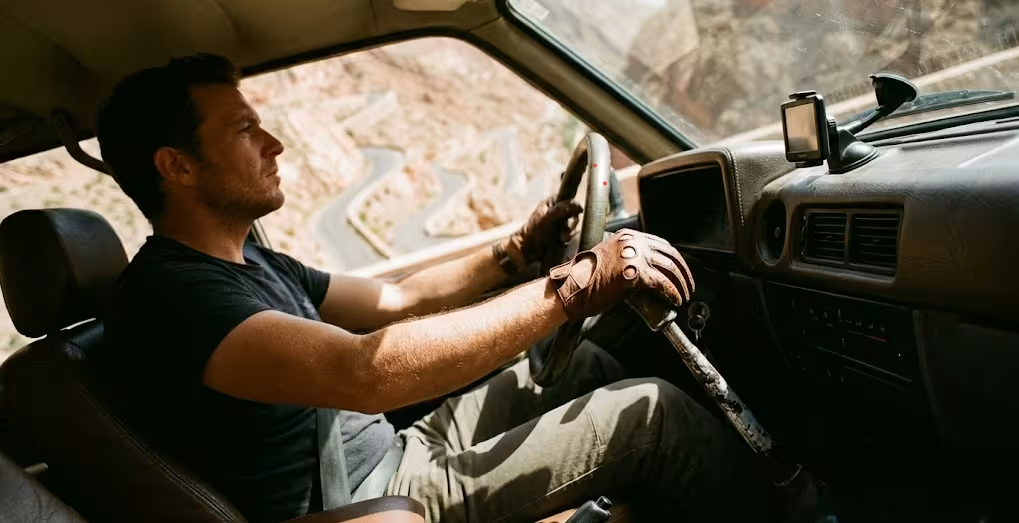
Conquering the Peaks: Choosing the Right Transmission for the Moroccan High Atlas
Driving through the High Atlas Mountains is a bucket-list experience for many travelers visiting Morocco. The legendary Tizi n'Tichka pass, reaching altitudes of over 2,260 meters, offers some of the most dramatic landscapes in North Africa. However, the geographic beauty comes with technical challenges: steep gradients, tight hairpin turns, and unpredictable weather conditions. For those booking a premium vehicle with Ouailcar, one of the most common technical questions is whether a manual or an automatic transmission is better suited for these demanding climbs. While traditionalists often lean toward manual control, modern automotive technology has shifted the balance. This in-depth analysis explores the pros and cons of both transmission types in the context of the Moroccan mountains, ensuring you choose the perfect partner for your ascent into the clouds.
The Anatomy of an Atlas Climb: What the Road Demands
Before diving into the mechanics, it is essential to understand the environment. Driving from Marrakesh to Ouarzazate involves hours of continuous climbing followed by long, taxing descents. You will encounter switchbacks—sharp 180-degree turns—where maintaining momentum is key. Additionally, the road is shared with heavy trucks and grand taxis, meaning you will often need to overtake on short straightaways or manage your speed behind slower vehicles on steep inclines. This requires a car that responds instantly to your commands without causing driver fatigue.
The Case for Automatic Transmission: Comfort and Focus
In the past, automatic cars were often criticized for being sluggish or hunting for the right gear on steep hills. However, the premium fleet at Ouailcar features the latest generation of automatic gearboxes, including 8-speed torque converters and dual-clutch transmissions (DSG), which have revolutionized mountain driving.
Reduced Driver Fatigue
Climbing the Atlas in a manual car requires constant gear changes—shifting from 4th to 2nd for a turn, then back to 3rd for a short climb. Over a four-hour drive, this involves hundreds of clutch depressions. In an automatic vehicle, this physical labor is removed. You can keep both hands on the steering wheel, which is a significant safety advantage when navigating narrow roads with sheer drops. By letting the car manage the shifting, you can focus entirely on your lane positioning and the breathtaking scenery.
Hill-Start Assist and Safety
One of the most stressful moments in a manual car is a hill start on a steep incline, especially if a truck is inches behind your bumper. Modern automatics in our fleet come equipped with Hill-Start Assist, which prevents the car from rolling backward when you move your foot from the brake to the accelerator. This feature provides immense peace of mind for international drivers who may not be used to the extreme gradients of the Tizi n'Test or Tizi n'Tichka passes.
The Case for Manual Transmission: Control and Tradition
Despite the rise of automatics, manual cars remain very popular in Morocco. For drivers who enjoy a connected feeling to the road, a manual gearbox offers a level of engagement that some find indispensable in the mountains.
Engine Braking on Descents
The real challenge of the Atlas isn't just going up; it's coming down. Long descents can cause brake fade if you rely solely on the brake pedal. In a manual car, engine braking—using a lower gear to control speed—is intuitive. However, it is important to note that all Ouailcar automatic vehicles feature a Manual or Sport mode (often with paddle shifters on the steering wheel), allowing you to select and hold a lower gear for the exact same engine-braking effect on descents.
Fleet Recommendation: The SUV Advantage
Regardless of the transmission you choose, the vehicle category is just as important. For the High Atlas, Ouailcar strongly recommends a Premium SUV. The combination of an automatic transmission with a high-torque diesel engine is the gold standard for mountain travel. An SUV provides better visibility over the hairpin turns and superior ground clearance if you encounter road construction or minor rock debris. Furthermore, the advanced suspension systems in our SUVs absorb the imperfections of mountain roads, ensuring that the vibrations don't translate into passenger discomfort.
The Verdict for the Atlas
For the vast majority of travelers, an automatic transmission is the superior choice for the High Atlas. The evolution of gearbox technology means that modern automatics are now faster, smarter, and often more fuel-efficient than their manual counterparts in mountainous terrain. They allow you to navigate the complexities of the Moroccan roads with a heads-up approach, prioritizing safety and relaxation. At Ouailcar, we ensure our automatic fleet is perfectly maintained to handle the thin air and high temperatures of the mountains, giving you the confidence to conquer the peaks in total luxury. Whether you are heading to the Oukaimeden ski resort or the desert gateway of Ouarzazate, let the car handle the mechanics while you enjoy the journey of a lifetime.