Chefchaouen Photography Guide : The most scenic driving routes through the Rif Mountains
Frames of the North: A Photography Guide to Driving the Rif Mountains and Chefchaouen
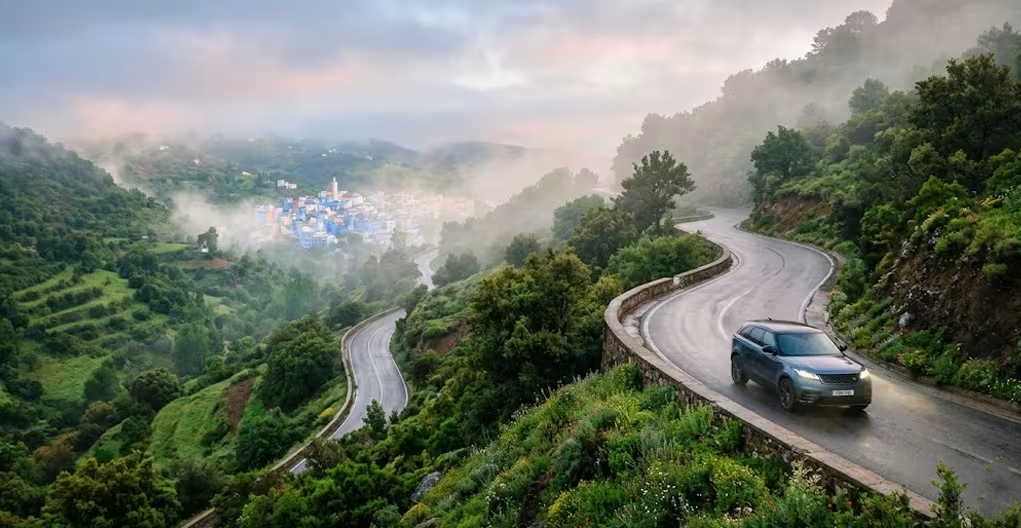
There is a specific kind of light that exists only in the northern tip of Morocco. It is a soft, mountain-filtered glow that bounces off the lime-washed walls of the Rif and illuminates the deep indigo of Chefchaouen. For photographers, this region is a playground of textures, but the real secret lies in the journey. While many travelers fly into Tangier and rush to the "Blue Pearl," the true visual story is found along the winding N2 and P4105 highways. A location voiture Marrakech or Tangier provides the mobility needed to pull over when the morning mist hits the olive groves or when a shepherd crosses a ridgeline at sunset.
Driving through the Rif Mountains is a sensory experience. The air grows cooler, the landscape turns a vivid Mediterranean green, and the roads begin to snake through limestone peaks. This guide is designed for those who travel with a camera in hand, seeking the most scenic routes and the hidden viewpoints that the tour buses simply cannot reach.
The Tangier-Tetouan-Chefchaouen Route: A Coastal to Alpine Transition
Starting your journey in Tangier offers a dramatic photographic arc. You begin with the wild, Atlantic-meets-Mediterranean energy of the coast before heading inland toward the mountains. The drive to Tetouan is fast and well-paved, but once you bypass the "White Dove" city and head south, the terrain transforms.
The Tetouan Descent
As you leave Tetouan, the road begins to climb. Look for safe gravel pull-offs about 25 kilometers south of the city. From here, you can capture the layered ridges of the Rif, which often appear in shades of blue and grey during the early morning. This is the perfect spot for long-lens landscape photography, compressing the terraced farms and small stone houses against the vast mountain backdrop.
- Derdara Viewpoint: Just 9 kilometers before you reach Chefchaouen, the village of Derdara offers a panoramic "first look" at the blue city nestled at the foot of the Jebel ech-Chaouen peaks.
- Pro Tip: Use a polarizing filter to manage the haze that often settles in the valleys during the afternoon.
For those starting further south, a location voiture Marrakech allows for a grander Moroccan odyssey, traveling through the central plains before hitting the green peaks of the north. To check the latest road conditions and travel advisories for the northern provinces, you can visit the Official Northern Morocco Travel Portal.
Chasing the Blue: Photography Inside Chefchaouen
Once you arrive and park your vehicle (we recommend the secure lots near the Parador Hotel or the Ras El Ma gate), the medina becomes your studio. Chefchaouen is famously blue, but for a photographer, the challenge is capturing the *variety* of blues—from pale sky tones to deep ultramarine.
Golden Hour at the Spanish Mosque
The "classic" shot of Chefchaouen is taken from the Spanish Mosque (Bouzaafar). While you can take a taxi, having your own car allows you to drive up to the trailhead near Ras El Ma just as the sun begins to dip. The 15-minute hike rewards you with a westward view as the city turns from blue to a glowing violet. It is one of the few places in Morocco where the "Blue Hour" feels literal.
The Hidden Alleys
Avoid the "Instagram spots" like the colorful umbrella street if you want authentic frames. Instead, head to the Rif Andalous quarter. Here, the blue is used more traditionally, and you’ll find the beautiful contrast of red-tiled roofs against the blue walls—a nod to the Andalusian heritage of the town’s founders. For more on the history of this unique architecture, explore the UNESCO tentative list for Chefchaouen.
Side Trip: The Akchour Waterfalls and God’s Bridge
No photography guide to the Rif is complete without mentioning Akchour. Located about 45 minutes from Chefchaouen, the drive itself is a masterpiece. The road follows the Laou River, cutting through deep limestone gorges. A location 4x4 Marrakech or a sturdy SUV is ideal here, as the road can be narrow with occasional fallen rocks from the cliffs above.
Once in Akchour, you have two photographic choices:
- God’s Bridge: A massive natural stone arch. Best photographed from the riverbed below for scale.
- The Waterfalls: A series of cascades ending in a grand "Grand Cascade." The trail is lush, offering plenty of macro-photography opportunities with local flora and the rare Barbary macaque.
For hikers and nature photographers, the Akchour climbing and trekking guides provide excellent maps of the area's more remote trails.
Choosing Your Photographic Vehicle
The Rif Mountains are characterized by steep inclines and tight bends. While the main roads are in good condition, the best viewpoints often require pulling onto unpaved shoulders or navigating small village tracks. At Ouailcar, we recommend a vehicle with good torque and reliable braking systems.
| Photography Style | Vehicle Recommendation | Why? |
|---|---|---|
| Street & Cityscape | Compact Sedan | Easy to park in the tight outskirts of Chefchaouen. |
| Landscape & Nature | Mid-size SUV | Higher ground clearance for roadside pull-offs in the Rif. |
| Off-Road Adventure | Full-size 4x4 | Essential for reaching the high-altitude cedar forests of Talassemtane. |
Etiquette and Technical Challenges
Morocco is a country that values privacy. When photographing in the medina, always ask for permission before taking a portrait of a local resident. A simple "S'il vous plaît?" or "Moumkin soura?" goes a long way. Many locals in the Rif are conservative and may prefer not to be in your frame.
Technically, the "Blue City" presents a unique white-balance challenge. Your camera’s "Auto White Balance" may struggle with the overwhelming blue, often making your images look too "cold." We recommend:
- Shoot in RAW: This allows you to adjust the temperature later to bring back the warmth of the stone and sunlight.
- Watch your exposure: The white-and-blue walls can trick your light meter into underexposing. Check your histogram frequently.
- Carry a wide-angle lens: The streets of Chefchaouen are narrow; a 16mm or 24mm lens (full-frame equivalent) is vital for capturing the verticality of the alleyways.
The Rif at Night: A Different Perspective
After the day-trippers from Tangier leave, Chefchaouen transforms. The orange glow of the streetlamps against the blue walls creates a cinematic, "noir" atmosphere. Long exposure photography in the Plaza Uta El Hammam captures the movement of the evening "paseo" against the ancient Kasbah walls. Because you have the freedom of a rental car, you don't have to worry about catching the last bus—you can stay until the stars appear over the mountain peaks.
Planning Your Photographic Itinerary
To get the most out of your location voiture, we suggest a 4-day northern loop:
Day 1: Arrival in Tangier, drive to Tetouan for a sunset medina shoot.
Day 2: Early drive to Chefchaouen, afternoon scouting in the medina, sunset at the Spanish Mosque.
Day 3: Day trip to Akchour for nature and landscape photography.
Day 4: Morning blue-hour shoot in the medina before driving back toward the coast or south toward Fes.
For more inspiration on the best times to visit for lighting and weather, check out the Lonely Planet guide to the Rif.
The Final Shot
The Rif Mountains are a testament to Morocco's diverse beauty. It is a region that demands you slow down, check your mirrors, and keep your camera bag on the passenger seat. Whether you are capturing the grand scale of the limestone cliffs or the small details of a brass door knocker against a blue wall, the independence of driving allows you to capture the moments that others miss.
At Ouailcar, we are proud to be part of your creative journey. Our location voiture Marrakech and Tangier services are designed to get you closer to the heart of the Rif. Pack your lenses, charge your batteries, and let the blue horizon lead the way.